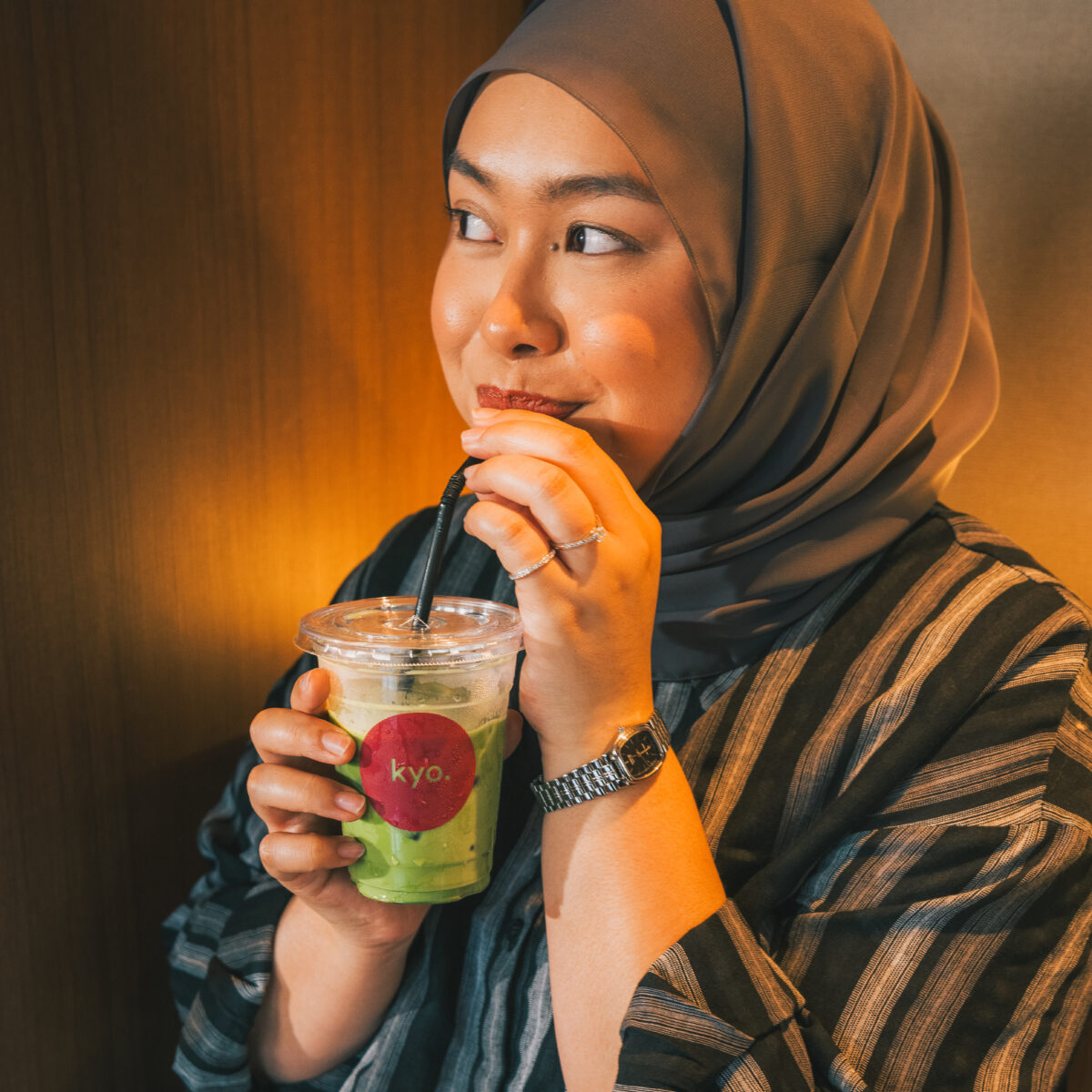
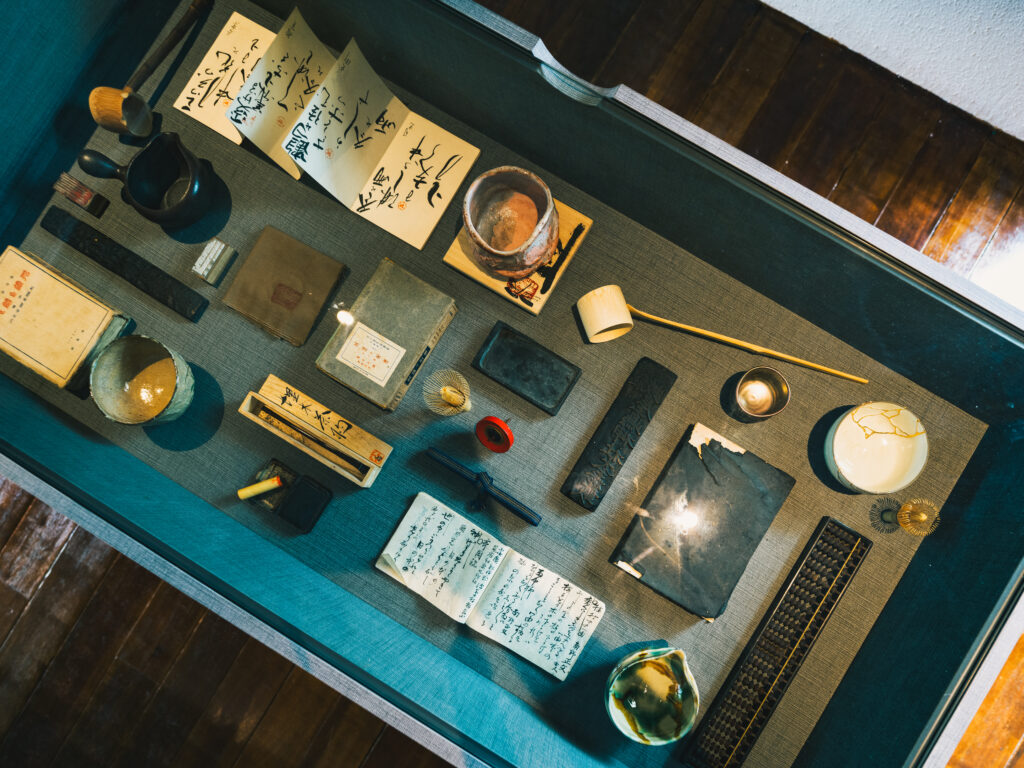
It’s an unassuming place that the new KYO has decided to open at. Tucked into a second-floor corner of a quiet building in Gadong proper, it’s distinctly reminiscent of a Japanese tea house on the inside – so much so that even the air here even feels different. KYO’s management share that a lot of design inspirations for their new branch were taken from Kyoto’s historic teahouses and like the original ones in Japan, KYO echoes with emotion and stories. “We wanted to create a space that slows people down, like a kind of calm at the end of a busy week where you can just breathe”, explains its founder who points out details like a cosy alcove, warm wood details and a Japanese style sitting area, which tug at you quietly inviting you to take a moment whether that be to reflect in silence or conversation. The space is artfully crafted to honour the essence of these essential yet unassuming spaces while embodying the philosophies of Wabi-sabi and omotenashi that call for attention and gratitude for the simply imperfect, and deep thoughtfulness.
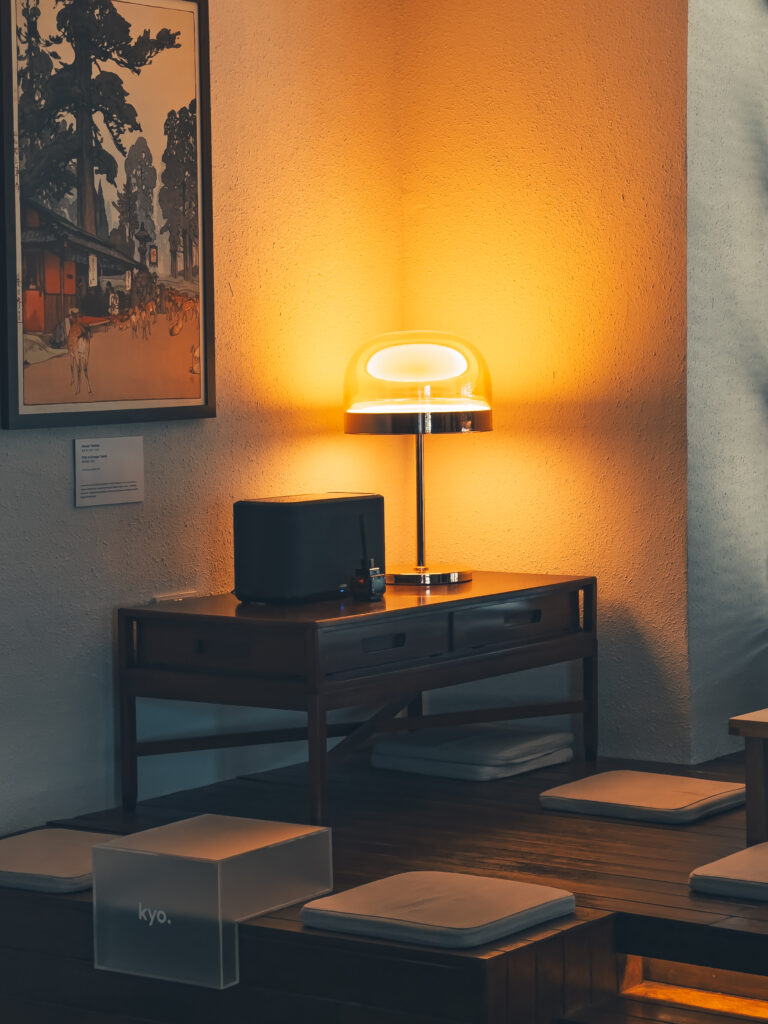
Looking around, you’ll almost certainly find more than one space to sink into thanks to a pared down aesthetic and seating arrangement. There’s been serious consideration about all of this, and KYO founder, Zaim, notes that the space itself is like an extension of what making matcha means to the team. “That’s why we designed the seating to feel a little more personal, almost like private corners for reflection. The choice for minimalism was less to do with allowing emptiness, but more about focus – allowing our guests to really see, feel, and taste what’s in front of them. Even the way the light hits the wood, and how the sun shines through the blinds, all of it is meant to make our guests feel more aware of the moment.”
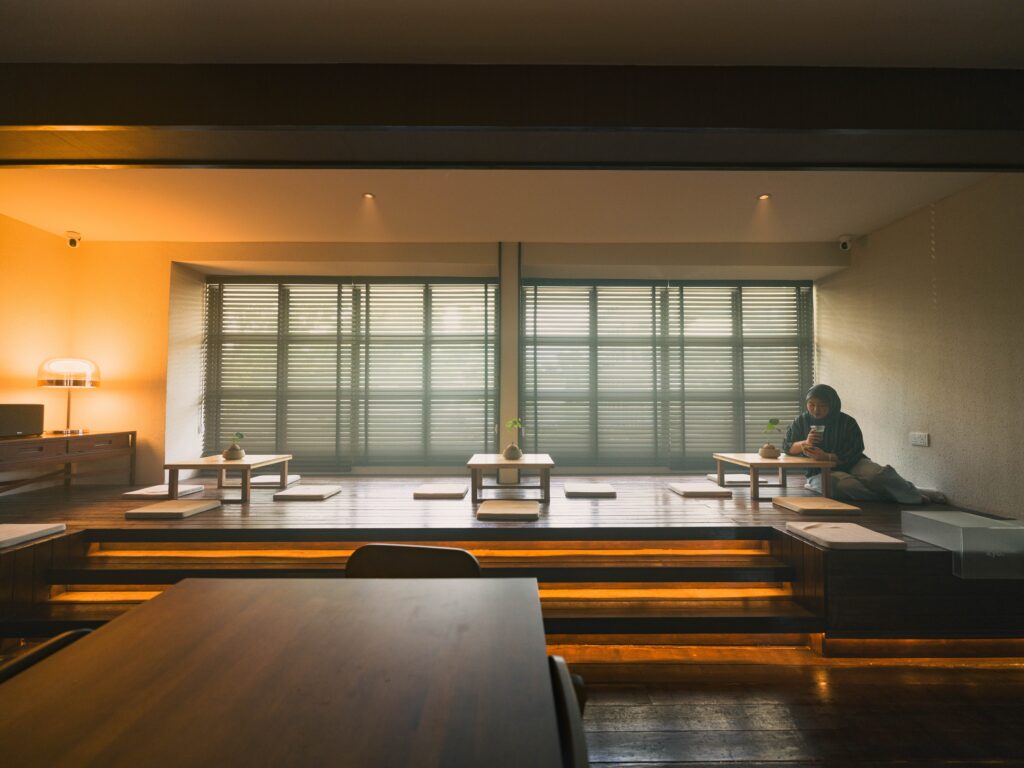
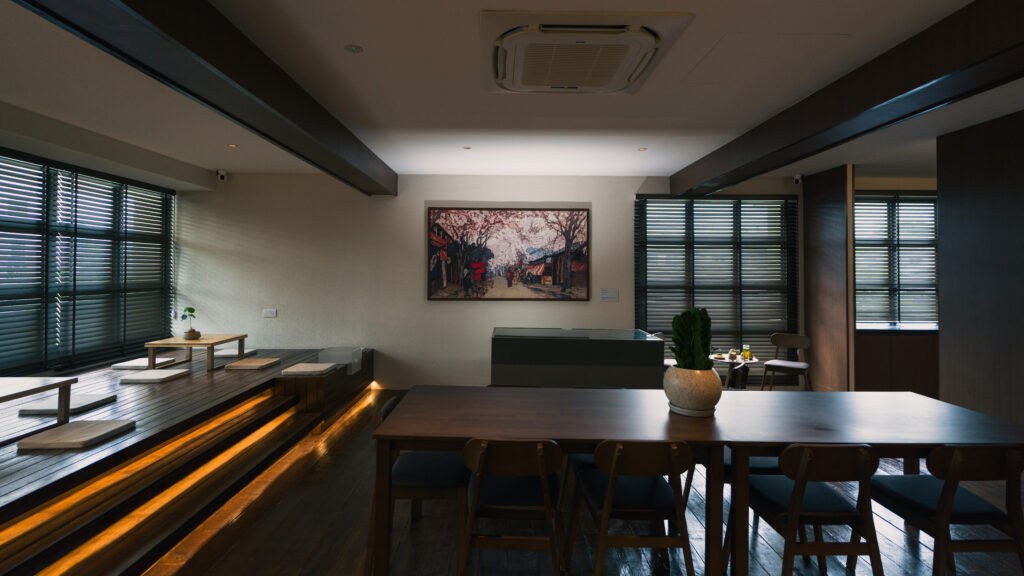
When shadows are allowed to exist then people slow down, he posits. “Conversations become quieter, and moments feel longer. That’s the kind of atmosphere we wanted.” It’s a conscious deviation from the usual bright and many-windowed café design that’s more easily replicated, which we imagine to be somewhat risky. While unconventional, KYO 2.0 is inimitably personal where guests feel like they entered into another rhythm here – one that’s quieter, slower, and maybe even a little sacred.