
Taste the legacy of Borneo! We’ve curated a top selection of flavour-packed dishes that promise an unforgettable gastronomic experience, celebrating the essence of Borneo’s traditional cooking and sweet delicacies. Do keep in mind that while some dishes may share similarities due to regional influence, refined cooking techniques bring out their own unique textures and flavours. Each dish has its own story and identity, while beautifully reflecting the shared culinary heritage of Brunei, Sabah, Sarawak and Kalimantan.
–
BRUNEI
AMBUYAT
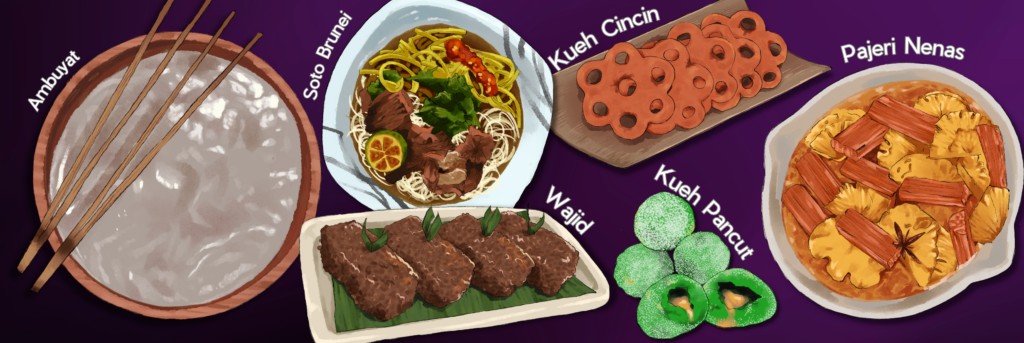
Soft gooey, and entirely tasteless — you either like it or don’t. Twirl the sago starch around the linked bamboo chopsticks (chandas), dip into a sauce, and swallow it whole. Best enjoyed with a variety of dipping sauces and side dishes, you can never go wrong with the iconic tempoyak (fermented durian) for a heavenly balance of sour, spicy and lingering sweetness.
–
SOTO BRUNEI
A Bruneian favourite is the divine, slow-cooked broth infused with aromatic spices, and served with your choice of noodles — bihun, mee kuning , or kahwin. It’s traditionally topped with shredded chicken or beef, but if you’re feeling adventurous, try Soto Brunei Special, a trio of beef, lungs, and tendons. Top it with lada rindu for an extra fiery kick!
–
PAJERI NENAS
Literally translated to “Pineapple Curry”, this is a staple Malay dish that is often cooked for eventful occasions. The desiccated coconut (kerisk) is the key ingredient to giving the nutty and thick consistency paired with blended spices and generous chunks of tangy pineapples.
–
KUEH CINCIN
Kueh Cincin, the ring cookies is fundamentally associated with the Brunei Malay community in Sabah. The main ingredients of this kueh is simple and accessible, the batter is deep fried twice to give a sweet yet crispy snack, making “krap krupp” sounds every bite you take.
–
KUEH PANCUT
Known as the Baba Nyonya dessert, this kueh has had a whirlwind of evolution through names and different adaptations of flours used. Sometimes goes by the name Onde-onde or kueh pancit, its rolled into a perfect bite-sized with melted coconut palm sugar filling, the mild caramel flavour oozes out of pops in your mouth.
–
WAJID
A sweet delicacy wrapped in simplicity, ethnos this traditional Brunei-Temburong snack. Made from a mixture of glutinous rice, coconut milk and palm sugar, it’s cooked until it reaches a sticky, caramel-like consistency (burnt caramel colour) before being wrapped in banana leaves. Enjoy the classic version, or try exciting flavours like yam, pumpkin or durian.
–
KALIMANTAN

PISANG GAPIT
Bananalicious! A legendary street food from East Kalimantan, these bananas are pinched flat before being grilled over charcoal. Once perfectly caramelised, the piping hot bananas are generously drizzled with a luscious coconut milk-based sauce that harmonises beautifully with their natural sweetness.
–
TEMET
Not your usual crackers that’s dry or oily, this traditional “wet” cracker skips the drying process entirely. Made using freshwater fishes (Belinda and Toman fishes found only in the headwaters of Kapuas Hulu), the fish is ground, boiled then steamed until cooked. The result? Bite-sized uniquely chewy delicacy, best enjoyed with the classic peanut sauce.
–
LAKSA BANJAR
Deeply rooted in the Banjar community of South Kalimantan and Borneo, this is the unique take on the classic laksa. Unlike coconut milk-based varieties, this version features a clear, spiced broth infused with the fragrant aromas of lemongrass, turmeric and galangal. Served with rice noodles, shredded chicken, hard-boiled eggs and fresh herbs, it offers a lighter yet equally satisfying flavour.
–
ONGOL-ONGOL HUNKWE
Originated from West Java, this naturally gluten-free and dairy-free steamed kueh uses mung bean powder starch mixed with coconut palm sugar. Its finished by rolling in steamed grated coconut and a pinch of salt, making it a nice balance of sweet with a hint of addictive saltiness. Though refined by using flours, the mung bean one exude the chewiest texture.
–
SOTONG PANGKONG
Usually a seasonal dish that is popular during Ramadan for several days, the Sotong Pangkong is dried cuttlefish that grilled over charcoal before it is repeatedly hammered until flat and the texture is tender and fibrous. A unique snack that is easy to chew while taking in its savoury and smoky flavour. Dipping it in a chili-shrimp sauce or a savoury peanut sauce makes it irresistible.
–
SARAWAK
TEBALOI
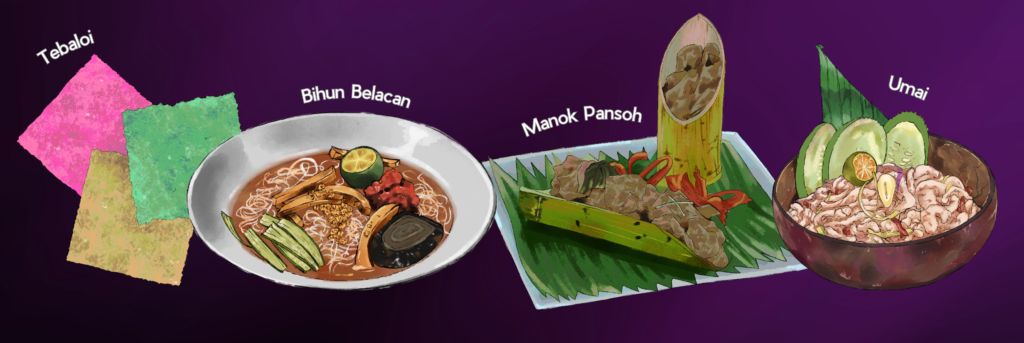
Now this is what you call a traditional snack! Closely associated with the Melanau people of Sarawak, these rectangular biscuits are traditionally slightly yellowish (thought they come in other colours too!) are crisp, flattened sago biscuits with a sweet and toasty flavour. Cooked over wood fire before being dried, it’s a delicate crunch that pairs well with coffee or tea.
–
BIHUN BELACAN
Bihun and belacan? The name might catch you off guard with its bold ingredients, but once you taste it, you’ll be surprised at how you savour every last drop. The rich, umami-packed belacan-based broth, paired with an array of toppings like century egg, blanched cuttlefish, fried garlic, and freshly chopped cucumber, is the ultimate comfort food — a deeply satisfying bowl of flavour.
–
MANOK PANSOH
Chicken cooked inside a hollowed-out bamboo stalk — how’s that for authenticity? Originally created due to lack of kitchen resources, Manok Pansoh has now become a cherished dish for its unique cooking method and rich flavours. Marinated with bold, aromatic herbs, the chicken retains its natural juices resulting in a dish bursting with succulence and fragrance.
–
UMAI
Salads are often associated with greens but have you heard of a fish salad before? A dish made out of the convenience for the fishermen of Melanau would thinly slice fresh raw fish — commonly mackerel, and very similar to ceviche,it’s marinated in lime with some garlic, onion, chilis and cucumbers for a refreshing tangy and spicy bite.
–
SABAH

NGUI CHAP
Derived from the Hakka pronunciation meaning “mixed beef”, such as stew meat, meat balls, tendons — you name all the beef parts may be in this particular beef soup. This beloved dish from Sabah is deeply flavourful, thanks to its diverse selection of beef parts simmered together in a rich broth. It’s so versatile that it goes well with everything, from pairing it with noodles, rice, or even slurping it up on its own.
–
PINASAKAN
A staple for the Kadazan-Dusun tribe, this dish is the living proof of resourcefulness in preserving fish for longevity. Local basung (big eye scad) fishes are preserved using takob-takob (wild mangosteen) as a natural souring agent, giving it a distinct tangy flavours that will have your taste buds tingling. The unique preservation method not only adds depth of flavour but also reflects the tribe’s deep connection with nature and traditional practices.
–
HINOMPUKA
Steam these glutinous rice cakes, and your entire kitchen will be filled with an irresistible aroma — a sure sign that this traditional treat and snack is worth a try! A traditional kueh of the Kadazan-Dusun people, this naturally purple glutinous rice cake gets its vibrant hue from the rice itself. Wrapped in banana leaves and steamed to perfection, its additively chewy texture is complemented by the luscious coconut milk.
–
BAMBANGAN
A wild mango that is primarily found in the Bornean rainforest has been enjoyed by indigenous communities around Borneo. This seasonal fruit, which ripens from green to brown, has a yellow fibrous tangy-sweet flesh and it can be eaten on its own or sliced and mixed with ingredients like chillies, limes and salt for a refreshing salad or pickled into a condiment that best enjoyed with grilled fish and in curries. The seed of the fruit can also be grated and sprinkled over the flesh for extra flavour and texture.
–
PENYARAM
A popular traditional snack across Sabah, Sarawak and Brunei, is a type of deep-fried sweet cake made from rice flour, palm sugar and water. It’s fried into a UFO disc shape, with crispy edges and chewy soft centre. The penyaram can be found in other flavours like pandan and creative cooks experiment with yam, sweet potato and corn to give more choices. Penyaram can be enjoyed any time of the day and goes well with tea or coffee. You’ll be able some stalls selling them at local markets or festivals.